Does Phytomem One Work? What the Evidence Really Shows
We looked at what proof would be needed to say a memory supplement works, what proof exists for Phytomem One and its 10 ingredients, and what you can realistically expect if you try it.
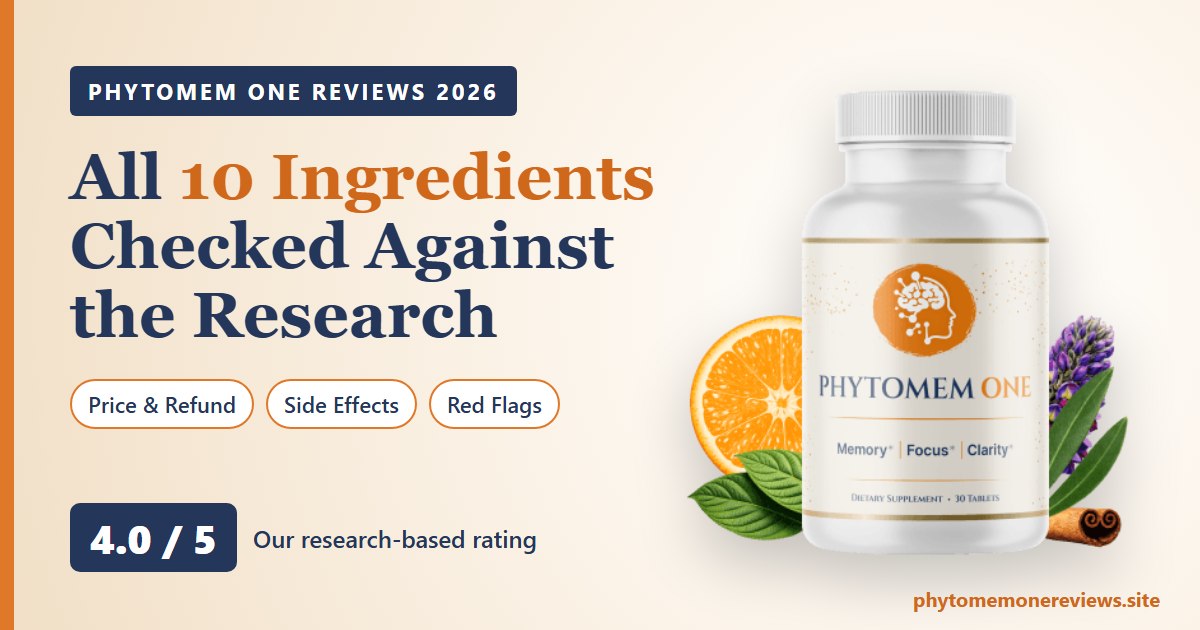
What would strong evidence look like?
To say a memory supplement “works”, you would want a randomised, placebo-controlled trial of the exact finished product, in people like you, measuring memory with standard tests for at least 12 weeks, with every ingredient dose listed on the label. Here is how Phytomem One measures up against that standard:
| What good proof needs | Phytomem One | Status |
|---|---|---|
| A clinical trial of the finished product | None published. The brand’s “references” are general studies, none tested this formula. | ✗ Missing |
| Ingredient doses on the label | No amounts are disclosed for any of the 10 ingredients. | ✗ Missing |
| Main ingredients backed by human memory research | Saffron, yes (small trials). Fucoxanthin, one small study. The rest have no human memory trials. | ⚠ Partial |
| Independent customer feedback | Only 3 seller testimonials; no Trustpilot or Reddit reviews yet (Nov 2026). | ✗ Missing |
| A way to test it at low risk | 60-day money-back guarantee through ClickBank (return all bottles; shipping not refunded). | ✓ Yes |
What evidence exists?
Because the product has not been tested, the only evidence is for its ingredients on their own, usually at doses we cannot confirm Phytomem One contains. Rated on published human studies:
| Ingredient | What human research shows | Memory evidence |
|---|---|---|
| Saffron extract | A 2020 meta-analysis of randomised trials found better cognitive scores than placebo in mild cognitive impairment and Alzheimer’s; trials were small, typically about 30 mg a day. | Moderate |
| Fucoxanthin | One small 2024 trial in older adults with memory concerns; most research is on weight. | Limited |
| Berberine HCl | Good evidence for lowering blood sugar; brain effects shown only in animals. Many drug interactions. | Animal only |
| Ceylon cinnamon, corosolic acid, olive leaf (oleuropein) | Small or mixed effects on blood sugar or blood pressure; no good human memory data. | None |
| Kudzu flower, Morosil | Studied for belly fat and weight loss, not memory. | None |
| Fucoidan | Lab and animal antioxidant studies only. | None |
| Xylitol | A sweetener / tablet filler with no brain role. | None |
So the case for Phytomem One rests mainly on saffron. That is a reasonable ingredient to try, but six of the ten ingredients are better known for blood sugar or weight, and well-studied memory ingredients such as omega-3 DHA, B vitamins or bacopa are not in the formula.
Want to check the live offer? Prices, bonuses, shipping and refund terms can change, so check them on the official order page before you buy.
Check Current Phytomem One Price →Can a supplement clear “brain microplastics” or fix “Type 3 diabetes”?
These are the two ideas the sales video builds on. Both come from real research, but neither supports the promise:
- Microplastics: a 2025 study in Nature Medicine found microplastics in human brain tissue, with higher levels in people with dementia. It did not show that microplastics cause memory loss, and no supplement has been shown to remove them from the brain.
- “Type 3 diabetes”: an informal research nickname for the link between insulin resistance and Alzheimer’s disease, not a medical diagnosis. Lowering blood sugar with berberine or cinnamon has not been shown to improve memory in people.
Your brain already depends on proven basics: good sleep, physical activity, managing blood pressure and blood sugar, hearing and vision care, and staying socially active. No supplement replaces those, or a check-up if your memory is getting worse.
Expected results and how long it takes
Without a product trial there is no reliable figure for how much Phytomem One might help or when. The saffron trials that showed benefits ran for about 12 weeks or longer, so the “results in a few weeks” message in the marketing is optimistic. If you try it, test it fairly inside the refund window:
- Write a baseline first. For one week, note how often you lose words, keys or appointments.
- Take it daily as directed (one tablet a day with food) and keep everything else the same.
- Mark the delivery date. The 60-day refund clock starts on delivery, and you need time to post all the bottles back.
- Compare around day 50. If nothing has changed, ask for a refund through the seller or ClickBank with your order number.
Who it might suit, and who should skip it
Might be worth a try
- Healthy adults with mild, everyday forgetfulness
- People not taking prescription medicines
- Buyers who will track results and use the 60-day refund
Skip it or ask a doctor first
- Anyone on diabetes, blood-pressure, blood-thinner or antidepressant drugs (berberine and other ingredients interact)
- Pregnant or breastfeeding women, and children
- Anyone with memory problems that are getting worse quickly
Our verdict: does Phytomem One work?
It is unproven. Saffron gives the formula a sensible base for memory support, but the product has no trial, the doses are hidden, and most ingredients target blood sugar and weight rather than memory. For a healthy adult who keeps expectations modest, a 60-day trial with the refund as a safety net is reasonable; it is not a substitute for medical advice.
Read our full Phytomem One review →Does Phytomem One work? FAQ
Is there a clinical study on Phytomem One?
No. As of November 2026 there is no published trial of the Phytomem One formula. The studies the brand points to are about individual ingredients or general topics such as microplastics.
How long does Phytomem One take to work?
Nobody knows for the product itself. Saffron studies that showed benefits lasted about 12 weeks or more, so judge it over several weeks, and decide before the 60-day refund window closes.
Can Phytomem One reverse memory loss or dementia?
No supplement has been shown to reverse dementia, and Phytomem One is not tested or approved for it. Memory that is getting worse should be checked by a doctor, because causes such as low vitamin B12, thyroid problems, poor sleep or medicine side effects can be treated.
What if it doesn’t work for me?
You can ask for a refund within 60 days of delivery through the seller or ClickBank. You must return all bottles, including empty ones, and shipping costs are not refunded.
Related research
Main sources: Saffron for mild cognitive impairment and dementia, meta-analysis of randomised trials (BMC Complementary Medicine and Therapies, 2020); Bioaccumulation of microplastics in decedent human brains (Nature Medicine, 2025); NCCIH fact sheets on berberine and cinnamon; National Institute on Aging guidance on memory problems. Dietary supplements are not intended to diagnose, treat, cure or prevent any disease. Talk to your doctor before starting a supplement, especially if you take medication.